
FHA vs. Conventional Loans: What’s the Difference?

George Agban • November 9, 2026

Share this article

If you are shopping for a home loan, two names will come up again and again: FHA and conventional. They are the two most common types of home loans, and the difference between them matters. It can change how much cash you need up front, what your monthly payment looks like, and which loan fits your situation best.

This guide explains both in plain words, the way I would explain them if we were sitting across the table.


What is an FHA loan?

An FHA loan is a home loan backed by a government program, the Federal Housing Administration. A regular lender still makes the loan. The government backing simply lowers the lender's risk, which is why these loans are often more flexible.

In plain terms, FHA loans are often a closer look for buyers who:

·      Have a smaller amount saved for a down payment

·      Are still building or rebuilding their credit

·      Are buying their first home, or have not owned a home in a while

That flexibility comes with a trade-off. FHA loans usually include mortgage insurance, a cost added to protect the lender if a borrower cannot pay. That insurance can raise your monthly payment, and the rules for how long you pay it depend on the details of your loan.


What is a conventional loan?

A conventional loan is not backed by that same government program. It is made by a bank, credit union, or mortgage lender under its own standards, which often follow common industry guidelines.

In plain terms, conventional loans are often a closer look for buyers who:

·      Have a stronger credit history

·      Have more saved for a down payment

·      Want to compare a wider range of loan options

Conventional loans can also include mortgage insurance, especially when the down payment is small. In many cases, though, that insurance can end once you have built up enough equity in the home, meaning you owe a good deal less than the home is worth. The exact rules depend on your loan.


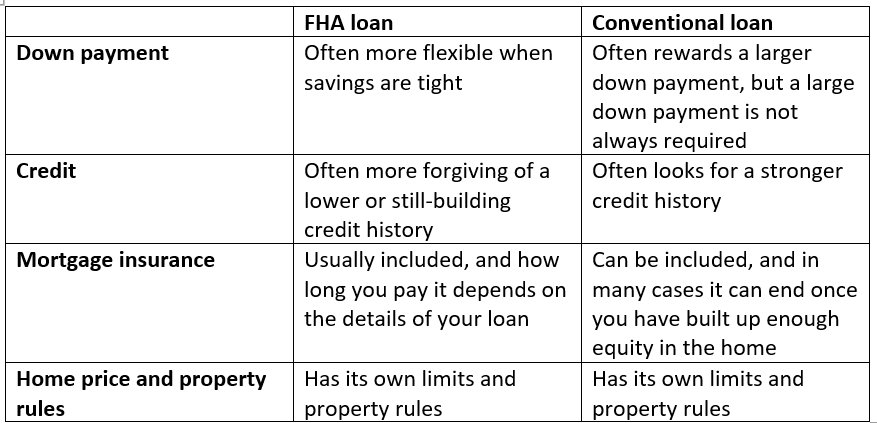
The main differences, side by side

Here is the simple version:

Comparison table of FHA and conventional loans, showing down payment, credit, mortgage insurance, and home price limits

A home that qualifies for one type may not qualify for the other, so check before you fall in love with a house. And with both types, compare the full monthly payment, not just the loan type name.

None of this means one loan is better for everyone. The right fit depends on your savings, your credit, your income, the home you want, and your plans for how long you will stay there.


The real cost is more than the loan type

Two buyers can look at the same house and end up with very different monthly payments, even with the same loan type. Before you choose, look at the full picture:

·      Your down payment and closing costs

·      Your monthly payment, including mortgage insurance, taxes, and homeowners insurance

·      How long you will pay mortgage insurance

·      What happens if you want to refinance later

A lower payment today is not always the cheaper choice over time. Ask for the full numbers, in writing, for each option you are considering, and compare them side by side.


Questions worth asking your lender

Take this list to your first conversation:

1.     Based on my savings and credit, which options should I compare?

2.     What would my full monthly payment be with each option, including insurance and taxes?

3.     How long would I pay mortgage insurance with each option?

4.     What paperwork do you need from me to give me real numbers?

5.     What could change my payment or my options between now and closing?

A good lender will answer in plain words. If an answer sounds too complicated, ask them to explain it again, more simply. That is their job.


Get your paperwork ready

Having your papers in order makes the process smoother. Lenders often ask for:

·      A photo ID

·      Recent pay stubs and tax returns

·      Recent bank statements

·      Details about any debts you already pay each month

Your list may be shorter or longer. Ask for the full list up front so there are no surprises.


So, FHA or conventional?

Think of it this way. If your savings are tight or your credit is still a work in progress, an FHA loan is often worth a close look. If your credit is strong and you have more saved, a conventional loan is often worth a close look too. Many buyers compare both, look at the real monthly numbers, and then decide.

You do not have to figure this out alone, and you do not have to decide in one conversation.


Questions about FHA vs. conventional loans?

Every buyer is different, and a short conversation can save you a long search. If you want to talk through your options in plain words, reach out to JD Agban Group for a free 30-minute consultation. Book at https://calendly.com/gagban/financial-home-tour or send an email to george.agban@jdagban.com We will explain your options in plain words, with no pressure.

Disclaimer: This article is for education only and is not financial or legal advice. No one can promise you an approval, a rate, or exact terms before a real review of your full situation. Loan programs and rules change over time, so check the current details with your lender before you decide.

Recent Posts

Two coworkers discuss documents at a desk in a bright office showroom, with laptops, coffee, and a tablet nearby.
By George Agban • October 28, 2026
Learn how equipment financing works, the difference between a loan and a lease, what lenders review, and how to compare the full cost before signing.

Homebuyers reviewing their savings and down payment options at home
By George Agban • October 17, 2026
Do you need 20% down to buy a home? Compare VA, USDA, conventional, and FHA loan options, plus down payment assistance and closing costs.

Model home, commercial building, and storefront beside financing charts and a calculator
By George Agban • October 12, 2026
Learn how lenders use DTI, DSCR, and cash flow to assess home mortgages, commercial real estate loans, and business financing.

Two people review architectural plans in a modern office overlooking a city skyline.
By George Agban • September 29, 2026
Explore commercial real estate loan options, lender requirements, and key metrics like DSCR and LTV. A practical guide for investors and business owners.

Three people reviewing documents with an agent at a table, with a small house model in front of them
By George Agban • September 23, 2026
What are closing costs, and how much should you budget? Learn about common fees, seller credits, and the documents to review before closing on a home.

Two people reviewing paperwork at a desk in a bright home office
By George Agban • September 10, 2026
Learn how lower credit affects loan approval and explore mortgage and business financing options based on income, cash flow, equity, and reserves.

Tall office buildings with a brown brick facade, blue glass tower, and white stepped skyscraper against a clear sky
By George Agban • August 26, 2026
Should you buy or lease commercial property? Compare costs, flexibility, equity, tax considerations, and financing options to make the right move for your business.

Person in a blue shirt holding several credit cards against a dark background
By George Agban • August 19, 2026
Learn how business credit scores work, why they matter for loans and financing, and how to build stronger business credit for your company.
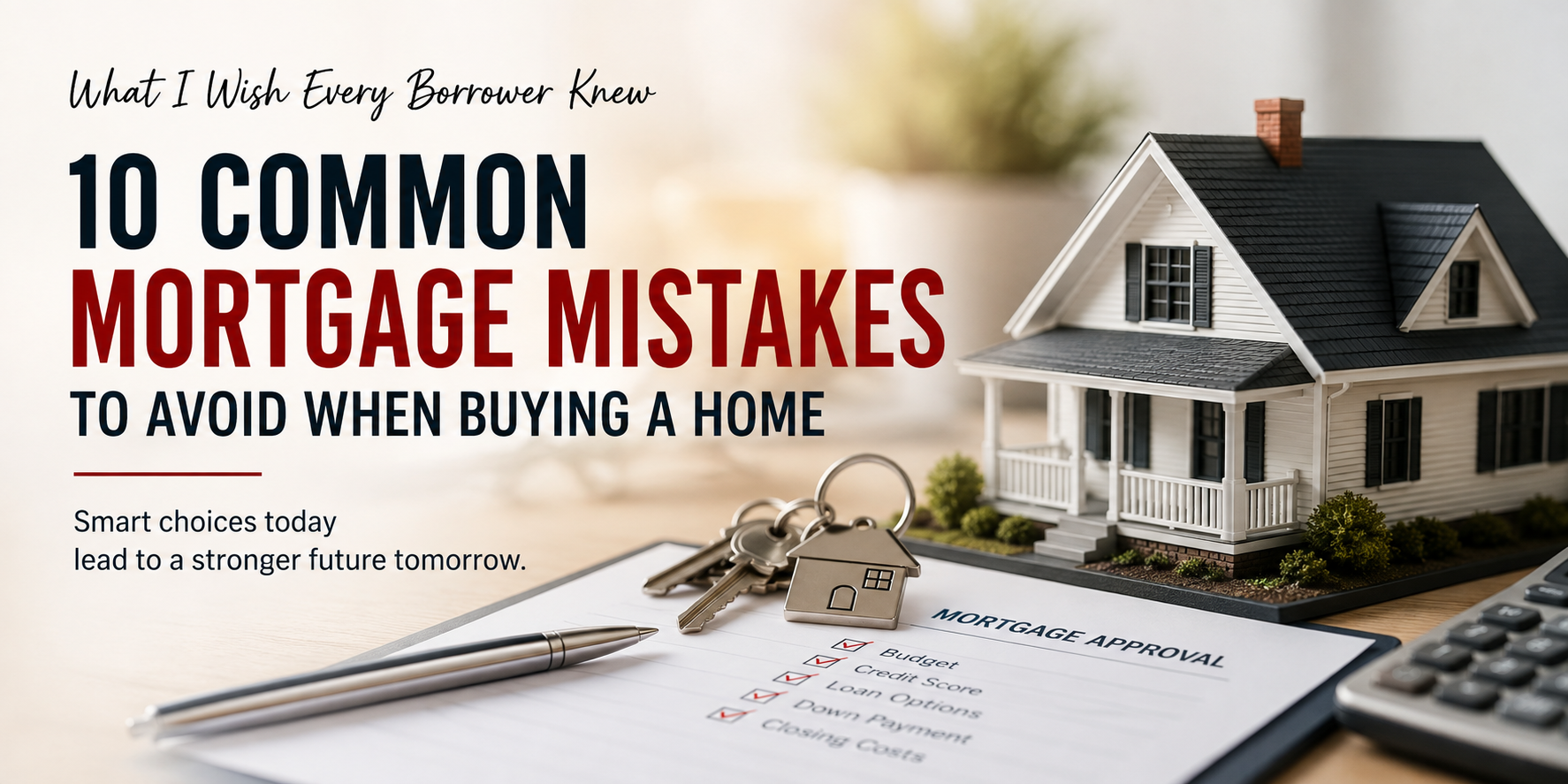
Graphic about 10 common mortgage mistakes with a house model, keys, and a document on a desk.
August 11, 2026
Learn 10 common mortgage mistakes homebuyers should avoid, from budgeting and credit changes to closing costs, insurance, and choosing the right lender.

Luxury finance desk with calculator, charts, gold bars, model house, and city skyline at sunset
By George Agban • July 14, 2026
Learn the 4 Cs of lending—Character, Capacity, Capital, and Collateral—and discover what banks evaluate before approving mortgages and business loans.

Show More