




Debt Metrics 101: DTI and DSCR for Home, Commercial, and Business Loans
When applying for financing, whether purchasing a home, acquiring commercial real estate, or expanding business operations—lenders evaluate your capacity to manage monthly payments. A key financial metric used across lending disciplines is the Debt-to-Income (DTI) framework.
While traditional DTI is primarily associated with residential mortgage lending, equivalent leverage and cash-flow metrics apply to commercial real estate and business loans. Understanding how lenders calculate these ratios helps borrowers prepare strong loan applications.

What is the Debt-to-Income (DTI) Ratio?
The Debt-to-Income ratio measures the percentage of monthly gross income required to pay recurring monthly debt obligations.

- Gross Monthly Income: Total income earned before taxes and voluntary deductions.
- Monthly Debt Obligations: Fixed recurring commitments including mortgage payments, auto loans, student loans, credit card minimum payments, and personal loans. (Non-debt operational expenses like utilities, insurance, and routine household expenses are excluded).
A lower ratio indicates sufficient cash flow buffer to accommodate existing debt while absorbing additional debt service.
How Debt Metrics Apply Across Loan Categories
1. Residential Loans (Home Mortgages)
In residential mortgage underwriting, automated underwriting systems evaluate two distinct ratios:
- Front-End Ratio (Housing Ratio): Percentage of gross monthly income allocated strictly to housing obligations (principal, interest, property taxes, home insurance, and HOA dues). Benchmarks generally target 28% or lower.
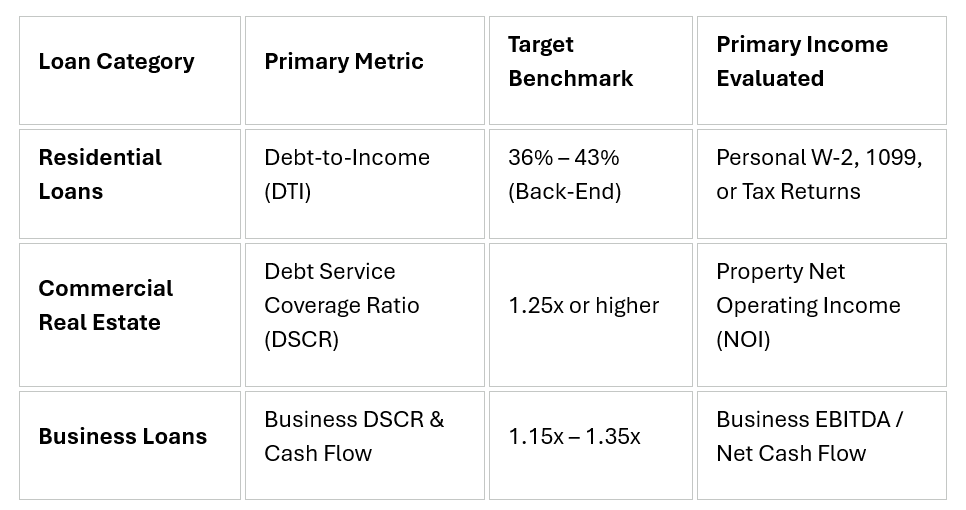
- Back-End Ratio (Total DTI): Percentage of gross monthly income allocated to all recurring debts combined. Conventional lending guidelines generally target 36% to 43%, though qualified government-backed programs (e.g., FHA or VA) may permit higher thresholds depending on compensating factors and risk assessment.
2. Commercial Real Estate Loans
In commercial real estate, property revenue is evaluated alongside borrower profile strength. Rather than personal DTI alone, lenders rely heavily on the Debt Service Coverage Ratio (DSCR):

- DSCR Benchmark: Most commercial lenders require a DSCR of 1.25x or higher, meaning the property generates 25% more Net Operating Income than required to service the debt.
Global DTI / Portfolio Analysis: For individual investors or small commercial deals, lenders perform a "Global Cash Flow" analysis. This evaluates the borrower's personal income and personal liabilities alongside operating income across all properties in their portfolio.
3. Business Loans
Business financing structures (such as term loans, lines of credit, and SBA financing) analyze operating cash flow to measure debt capacity:
- Business DSCR: Evaluates cash flow (typically EBITDA or adjusted cash flow) against total existing and proposed debt payments. Standard requirements generally range between 1.15x and 1.35x.

- Global Cash Flow Analysis: For closely held businesses, underwriters assess both the entity’s financial statements and the business owner’s personal income/tax returns to determine total global debt service coverage.
Debt Ratio Benchmarks Comparison

Best Practices for Improving Borrowing Profiles
- Reduce Revolving Debt: Lowering credit card balances reduces minimum required monthly payments, which directly lowers the DTI ratio.
- Limit New Credit Inquiries: Avoid incurring new debt obligations shortly before or during the underwriting process.

- Maintain Accurate Documentation: Keep tax returns, financial statements, bank statements, and leases fully documented and up to date.
- Debt Restructuring: Lowering monthly debt payments through debt consolidation or extended maturities can improve total cash flow metrics.
Disclaimer: This publication is provided for educational and informational purposes only and does not constitute financial, legal, tax, or investment advice. Loan approval criteria, underwriting guidelines, and terms vary depending on loan program, asset type, and individual borrower qualifications.