
Business Credit Scores Explained: How They Work and Why Every Business Owner Needs One
When you apply for a business loan, lenders look at more than just your revenue, they look at your business credit score. While most business owners are familiar with their personal credit score, business credit operates under an entirely different set of rules.
Understanding your business credit score is critical to securing funding, accessing better repayment terms, and protecting your personal assets.

When you apply for a business loan, lenders look at more than just your revenue, they look at your business credit score. While most business owners are familiar with their personal credit score, business credit operates under an entirely different set of rules.
Understanding your business credit score is critical to securing funding, accessing better repayment terms, and protecting your personal assets.
What is a Business Credit Score?
A
business credit score
measures your company's creditworthiness and financial dependability. Just like personal credit scores indicate how reliably you pay personal debts, a business credit score demonstrates to lenders, vendors, and suppliers how safely they can extend credit or capital to your business.
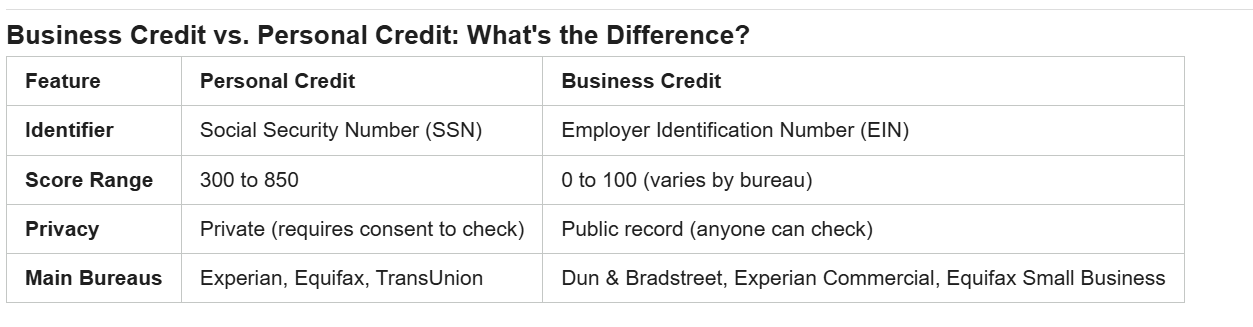
Unlike personal credit, which ranges strictly from 300 to 850, business credit scores typically operate on a scale from0 to 100, with higher scores indicating lower risk.

When you apply for a business loan, lenders look at more than just your revenue, they look
The Major Business Credit Bureaus and Their Scores
Different bureaus calculate business risk using distinct models:
Dun & Bradstreet (PAYDEX Score): Ranges from 1 to 100. It relies heavily on payment history with vendors and suppliers. A score of 80 or above indicates prompt or early payments.- Experian Commercial (Intelliscore Plus): Ranges from 1 to 100. It predicts the likelihood of serious delinquency using payment trends, credit utilization, and public records.
- Equifax Small Business: Offers multiple risk scores evaluating commercial credit defaults, payment history, and financial health.
- FICO SBSS (Small Business Scoring Service): Ranges from 0 to 300. This hybrid score combines both business and personal credit histories. SBA 7(a) loans require a minimum FICO SBSS score (often 155+) for pre-screening.
Why Your Business Credit Score Matters
- Better Loan Terms and Lower Rates:
High scores unlock lower interest rates, higher borrowing limits, and extended repayment windows.
- Separates Personal and Business Risk:
Building dedicated business credit helps protect your personal credit score and assets from business debt obligations.
- Favorable Vendor Terms:
Suppliers often offer net-30, net-60, or net-90 payment terms without requiring upfront cash if your business credit is strong.
- Faster Funding Approvals: Lenders can underwrite and approve commercial and business funding requests much faster when your financial history is clear and verified.
How to Build and Improve Your Business Credit Score
- Register Your Business Entity: Set up an LLC, S-Corp, or C-Corp, and apply for a free Employer Identification Number (EIN) through the IRS.
- Get a D-U-N-S Number: Register with Dun & Bradstreet to generate your D-U-N-S profile, which is required by many lenders and government programs.
- Open Dedicated Business Accounts: Maintain a separate business checking account and business credit card.
- Work with Vendors Who Report: Ensure your vendors, suppliers, and business credit cards report payment activity to the major commercial credit bureaus.
- Pay Early or On Time: Pay vendor invoices and debt obligations before the due date—early payments are the single best way to maximize scores like Dun & Bradstreet's PAYDEX.
Secure the Business Capital You Need
Whether you are seeking SBA financing, equipment funding, or a line of credit, maintaining a healthy business credit score is your gateway to strategic growth.
Ready to explore your financing options?
Book a consultation with our brokers to review your financial profile and find the right loan strategy for your business.